
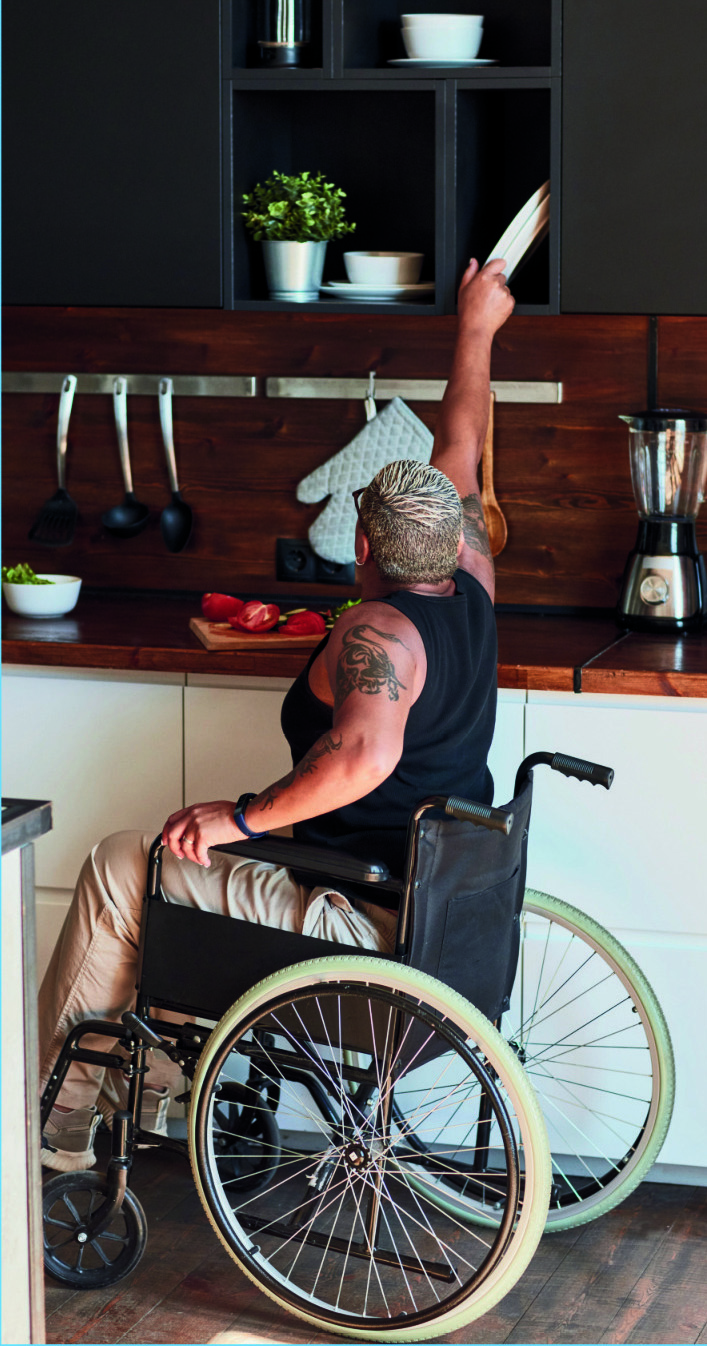
As our population ages, healthcare systems face growing pressure to meet the complex needs of older adults — especially as the number of patients over 65 rises rapidly and a wave of boomer-age providers approaches retirement.
Designing supportive environments for older individuals requires a shift from institutional models to residential-style spaces that emphasize familiarity, simplicity, and safety. Changes caused by dementia, such as impaired memory, disorientation, and distorted sensory interpretation, require specific design interventions that go beyond standard aging-in-place strategies. The primary goal is to maintain cognitive function, facilitate activities of daily living (ADLs), and reduce behavioral symptoms like agitation or anxiety through thoughtful environmental cues. This includes creating intuitive layouts that aid comprehension, providing visual access to nature for orientation, and regulating sensory stimuli to prevent overstimulation.
Ultimately, a dementia-supportive home uses the “hallmarks of home” to promote independence and provide a sense of ownership and security for the individual.
This guide integrates general design principles with room-specific strategies to create a safe, familiar, and supportive home environment.